Ferrovial
Designing an editorial system capable of supporting multiple formats, contributors and growing volumes of content without compromising consistency.
Context
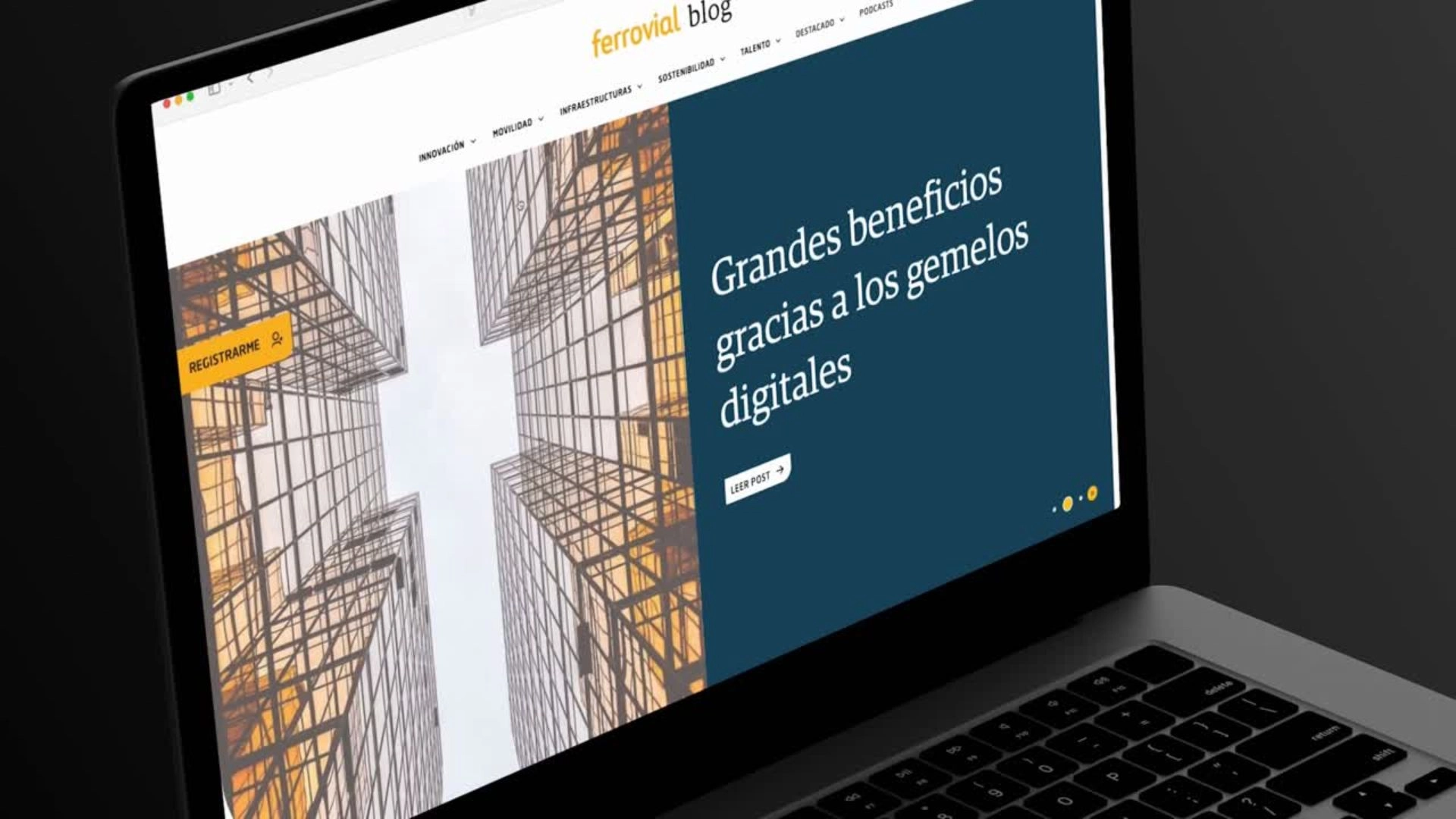
Ferrovial needed a corporate blog that could operate as more than a communication channel.
The volume of content was significant. Contributors included both internal and external authors. Formats ranged from articles and videos to podcasts.
At the same time, the visual identity of an IBEX 35 company is not a particularly flexible starting point.
The blog needed to function as an institutional platform while also providing a carefully curated reading experience.
The Challenge
The editorial team had a clear understanding of both its goals and its audience.
Our role was not to define the content strategy.
It was to transform that vision into a system capable of sustaining it over time.
The project involved balancing two competing demands:
- Respecting a well-established corporate identity with little room for improvisation.
- Creating an editorial environment with enough visual flexibility to avoid feeling like an annual report.
Designing within the constraints of a strong brand is not a limitation.
It is about finding the space where adaptation can happen without compromising coherence.
Building an Editorial System
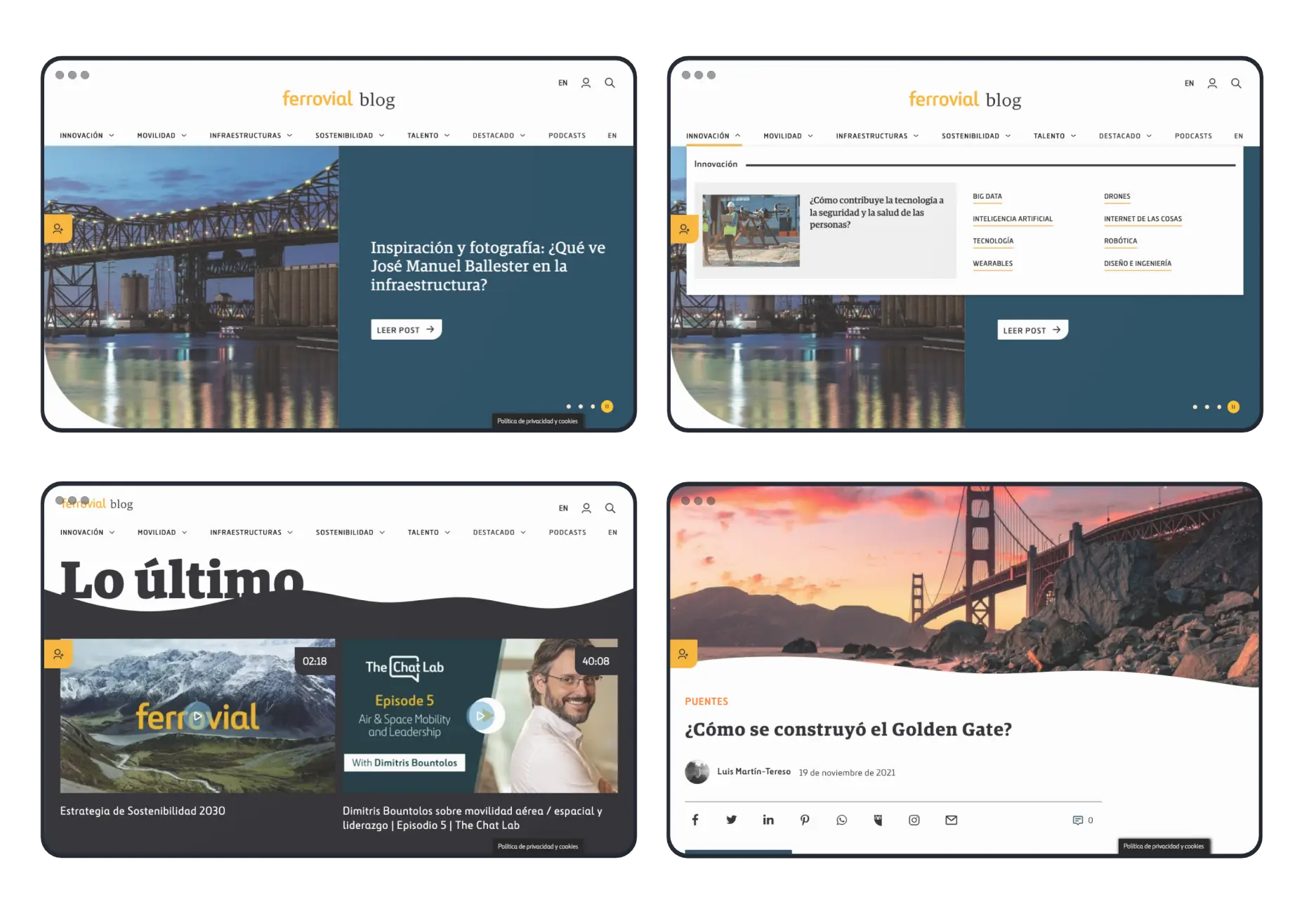
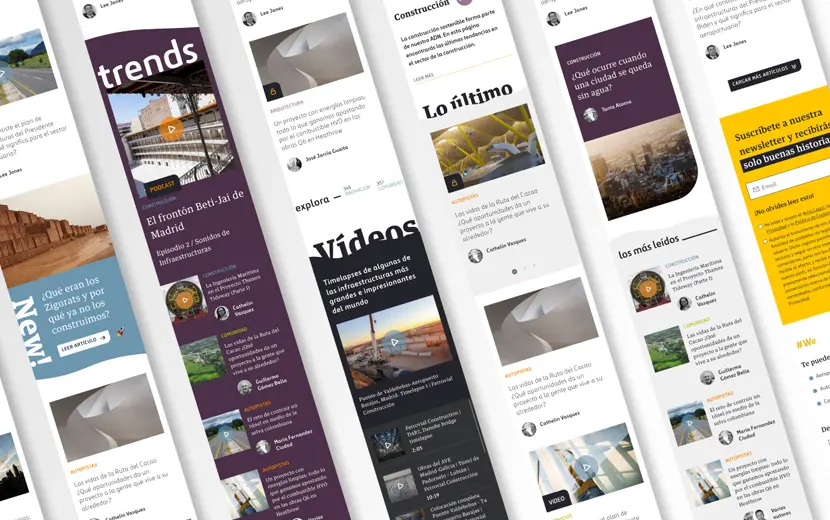
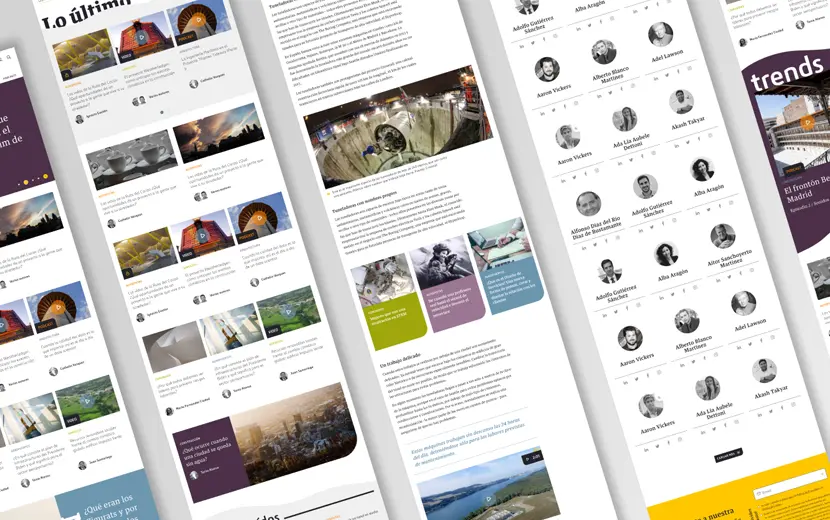
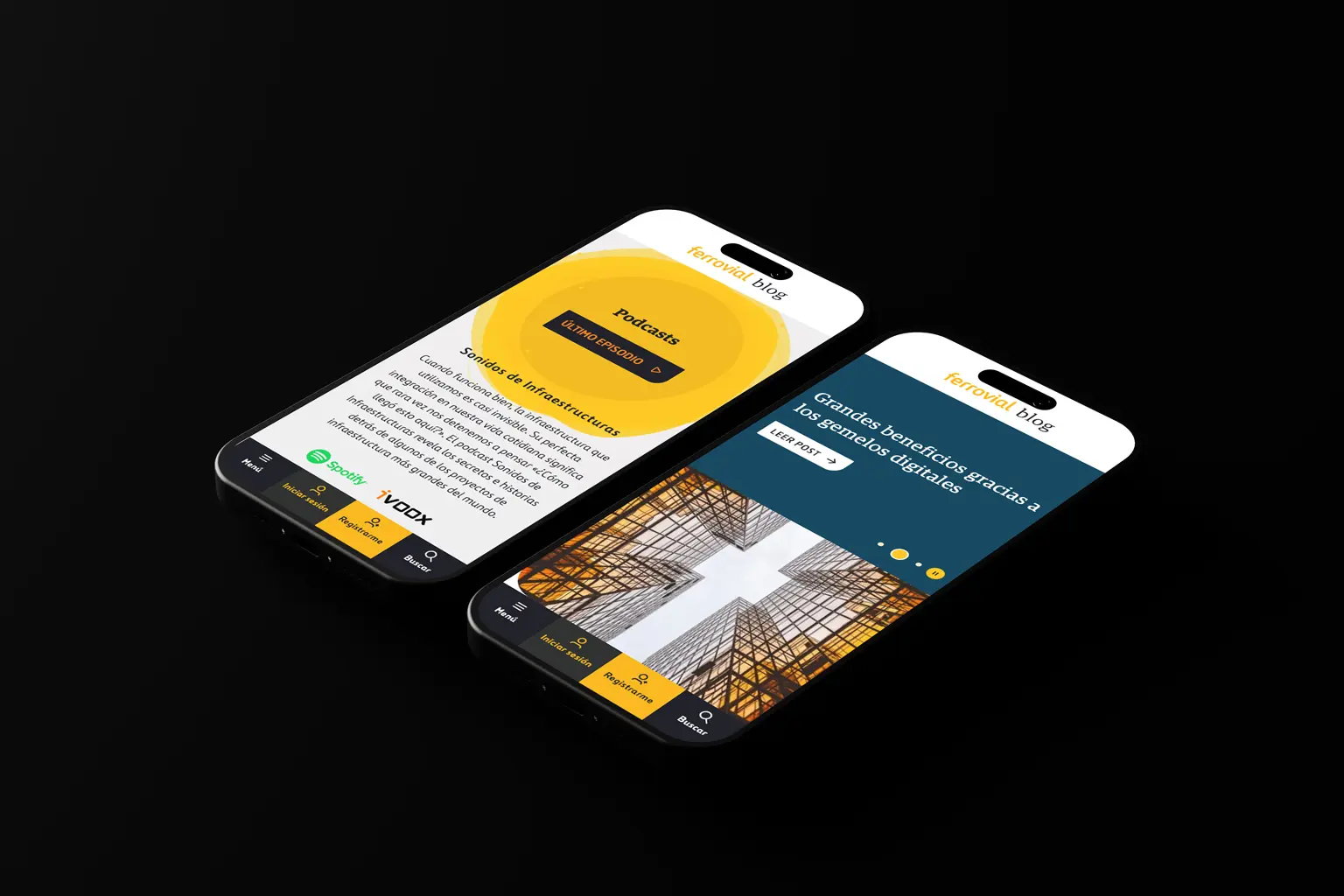
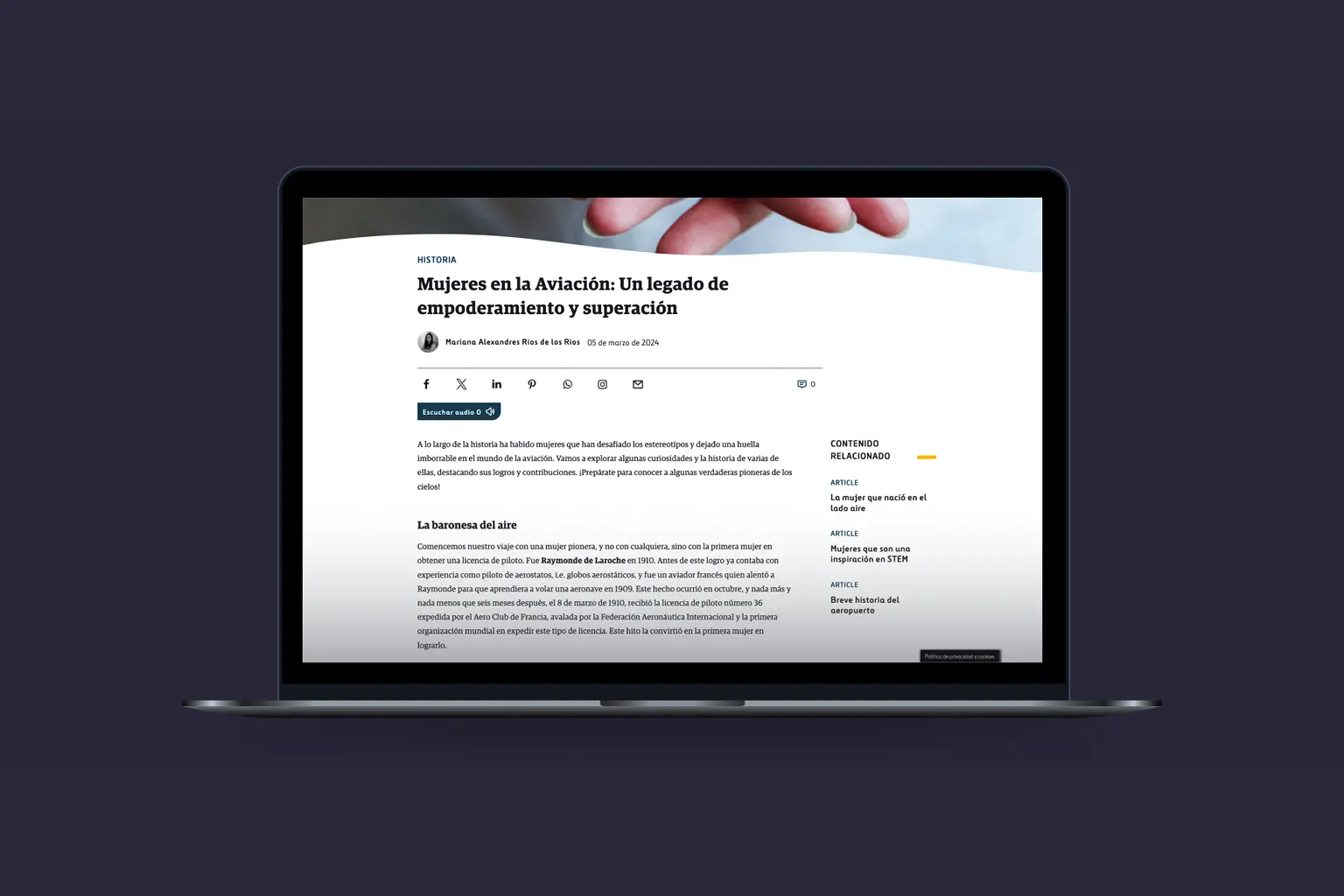
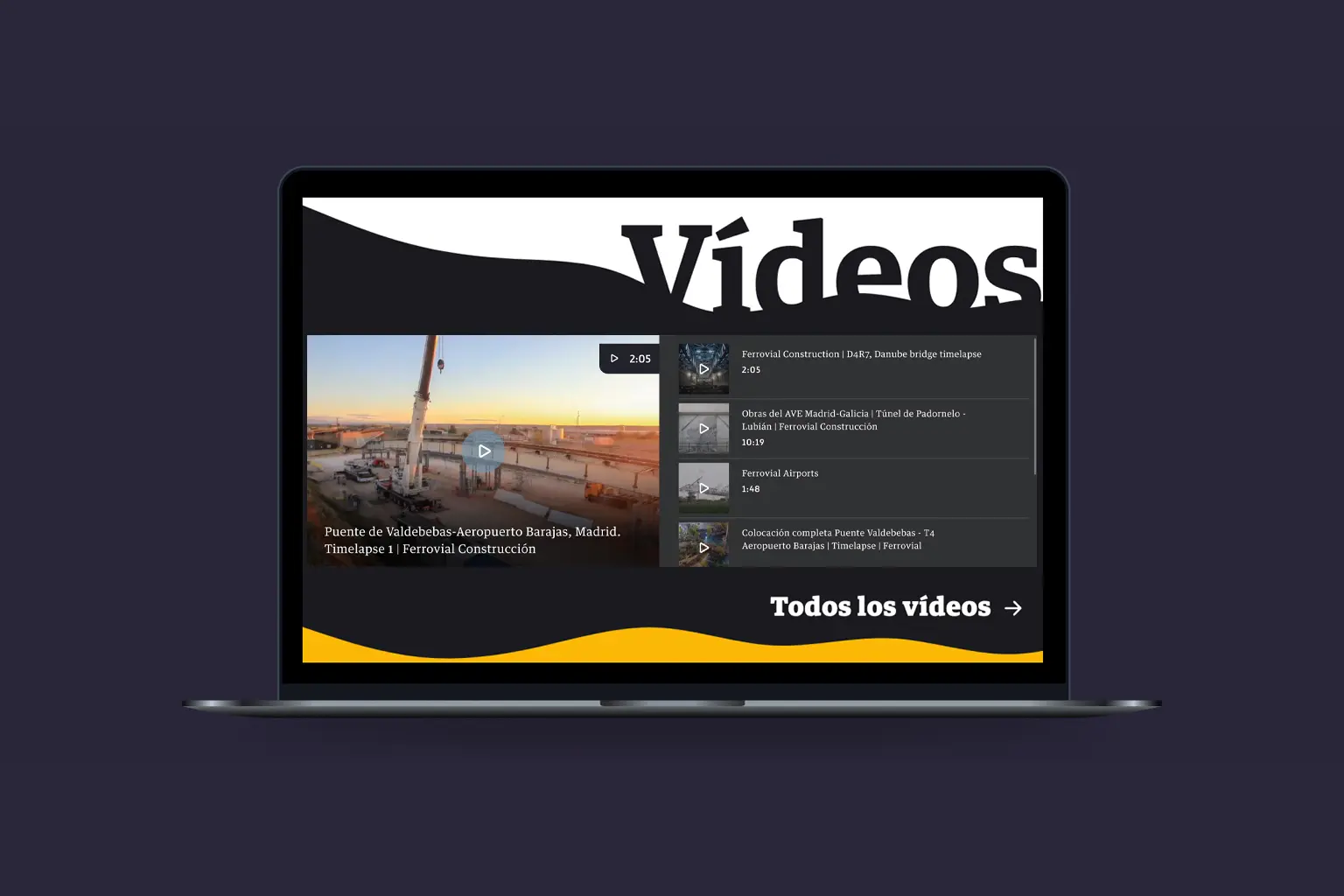
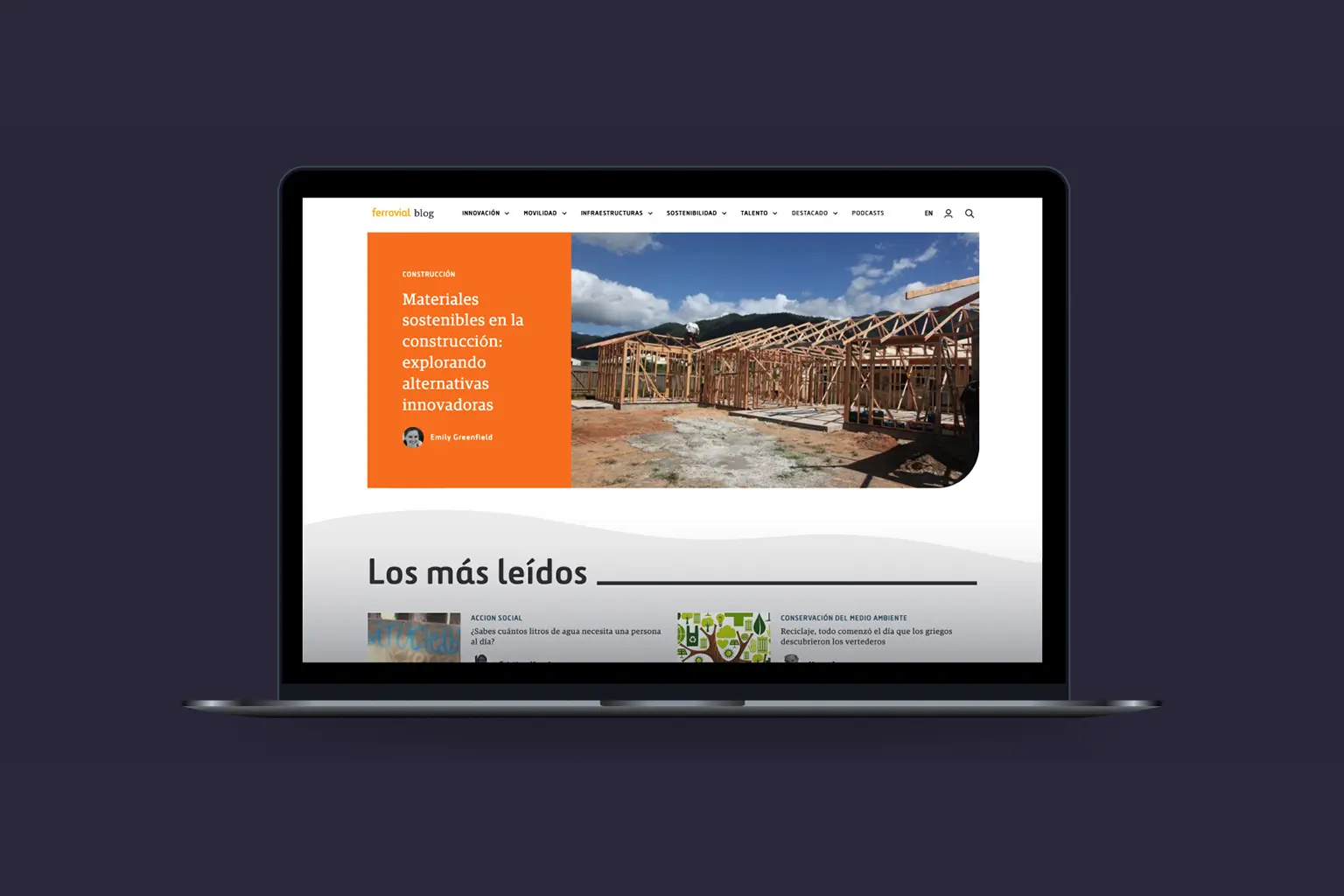
We defined a clear information architecture, established content hierarchies and designed a flexible visual framework capable of growing alongside the channel.
The colour palette was expanded to introduce greater dynamism while remaining aligned with the parent brand.
Typography was selected to support long-form reading.
Components were designed to be reused independently by the editorial team, reducing reliance on designers for day-to-day publishing.
The result was a foundation capable of supporting multiple voices without losing consistency.
This phase helped us:
- Organise content within a clear and scalable structure.
- Enable autonomous publishing while maintaining consistency.
- Support multiple contributors within a shared editorial framework.
- Create a solid foundation for the long-term evolution of the channel.
- Establish visual references to guide future growth.
What Changed
The team moved from managing content to operating a system.
Decisions such as how authors are presented, how articles are prioritised or how text and video coexist no longer needed to be reinvented every time.
The system provided the rules.
There was no need to redesign every new piece of content.
The framework was already in place.
Designing for content means designing for the long term.
Contact
For projects
Live or upcoming digital products. When there are decisions to make about product, experience, or brand, we fit.
Collaborations
We work with a trusted network of specialists. If you share our way of thinking, we would be glad to meet you.